
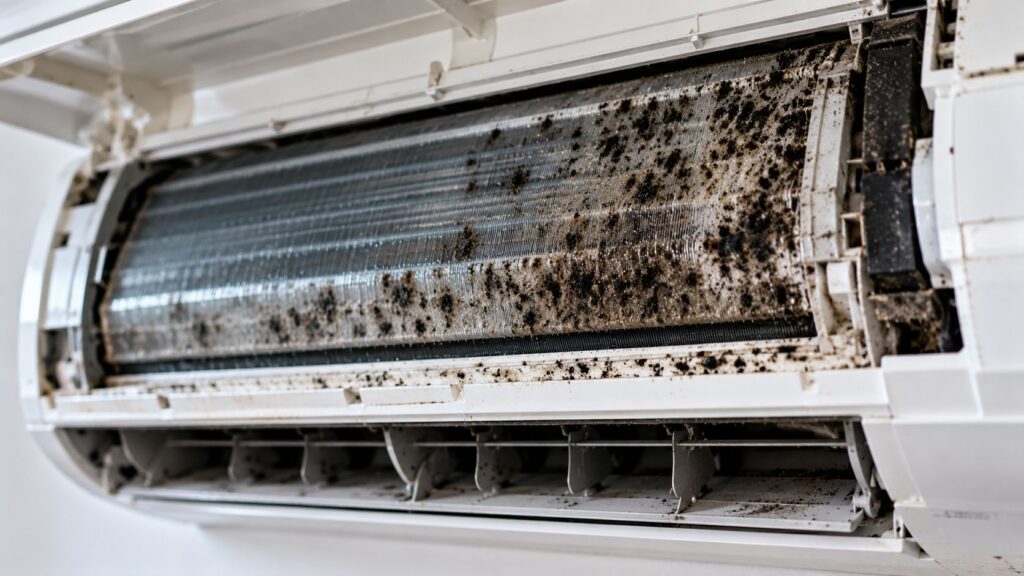
A musty smell from your air conditioner is more than an inconvenience. In some cases, it can indicate excess moisture or microbial growth somewhere within the HVAC system.
Air-conditioning systems naturally handle moisture as warm indoor air passes across cold cooling coils. When drainage, humidity control, insulation, cleanliness or maintenance is inadequate, moisture can remain where it should not—and this can create conditions that support mold growth.
Understanding why mold develops is the first step toward removing it properly and preventing it from returning.
Why Can Mold Grow Inside an AC System?
Mold needs moisture and a suitable surface or material on which to grow.
Within an HVAC system, moisture can develop around components such as:
- Evaporator coils
- Condensate drain pans
- Drain lines
- Air-handling units
- Duct insulation
- Poorly insulated ductwork
- Areas affected by water leakage or condensation
Dust and other accumulated material can further contribute to conditions that support microbial growth.
This is why effective mold control is not simply about applying a chemical treatment. The source of the moisture must also be identified and corrected.
What Are the Warning Signs?
1. A Persistent Musty Odor
One of the most noticeable warning signs is a musty, damp or earthy smell when the AC operates.
The odor does not prove that mold is present, because dirty coils, stagnant drain pans and other contamination can produce similar smells. However, a persistent odor is a good reason to have the system professionally inspected.
2. Visible Growth Around AC Components
Discoloration or growth may sometimes appear around air vents, coils, drain pans or inside accessible sections of the HVAC system.
Not every dark mark is mold, so visual appearance alone should not always be treated as a definitive identification.
If suspicious growth is found, the priority should be to determine where the moisture is coming from and how extensively the system is affected.
3. Repeated Condensation or Water Leakage
Water dripping from an indoor AC unit, standing water in a drain pan, blocked condensate lines or excessive condensation can create conditions favorable to mold growth.
These are maintenance problems that should be corrected promptly—even when no mold is currently visible.
4. Mold Keeps Returning After Cleaning
If mold-like growth repeatedly returns after surface cleaning, there is likely an underlying condition that has not been corrected.
Possible causes include excessive humidity, water leakage, blocked drainage, condensation or inadequate insulation.
Removing visible growth without correcting the moisture source is not a long-term solution.
5. Unusual Indoor Odors or Air-Quality Concerns
Occupants may sometimes notice that odors become stronger when the AC starts operating.
An HVAC inspection can help determine whether the source is within the air-conditioning system or elsewhere in the building.
Indoor air quality is influenced by many factors, so symptoms or odors should not automatically be attributed to mold or duct contamination without proper investigation.
Where Should Technicians Look?
A professional HVAC hygiene inspection should look beyond the visible air vents.
Depending on the system, important areas may include:
Evaporator Coil
The cooling coil is naturally exposed to condensation and can collect dust if filtration or maintenance is inadequate.
Condensate Drain Pan
Standing water or accumulated contamination inside a drain pan can create conditions favorable to microbial growth.
Condensate Drain Line
A blocked or poorly functioning drain can cause water to accumulate where it should not.
Air-Handling Unit
Internal surfaces, blower sections, filters and other components should be assessed for contamination and moisture.
Ductwork
Ducts should be inspected where contamination is suspected, particularly around areas affected by condensation, water intrusion or damaged insulation.
Duct Insulation
Wet or mold-contaminated porous insulation requires particular attention. In some circumstances, contaminated porous material cannot be effectively restored and may need replacement.
Can You Just Spray the Mold and Kill It?
This is one of the most important misconceptions about HVAC mold treatment.
Spraying a chemical into a contaminated AC system is not a substitute for proper cleaning.
Professional remediation should focus first on identifying the source, controlling moisture and physically removing contamination from surfaces that can be appropriately cleaned.
Where antimicrobial treatment is appropriate, the product should be suitable for the specific application and used according to its approved instructions.
The objective should not simply be to “kill” contamination while leaving the residue inside the HVAC system.
Should AC Ducts Be Cleaned If Mold Is Found?
It depends on where the contamination is located and how extensively the HVAC system is affected.
If substantial mold growth is confirmed on accessible hard-surface ductwork or other HVAC components, professional cleaning may be appropriate.
However, cleaning every duct simply because mold was found somewhere in the building is not automatically necessary.
A proper assessment should determine:
- Where the contamination is located
- What caused it
- Which HVAC components are affected
- Whether the affected material can be cleaned
- Whether any material requires replacement
- What corrective work is necessary to prevent recurrence
This assessment-first approach helps avoid unnecessary work while ensuring contaminated components are not overlooked.
What About Mold Inside Insulated Ducts?
Porous HVAC materials require special consideration.
When internal fiberglass insulation or similar porous duct material becomes wet and mold-contaminated, effective cleaning may not always be possible.
In these situations, replacement of the affected material may be more appropriate than repeated cleaning or chemical treatment.
This is another reason why professional assessment should come before choosing the treatment method.
How Can Mold in an AC System Be Prevented?
The most effective strategy is moisture control combined with proper HVAC maintenance.
Keep Drainage Systems Clear
Condensate drain pans and drain lines should remain clean, unobstructed and capable of removing water correctly.
Maintain Cooling Coils
Dirty coils can affect system performance and contribute to contamination. Coils should be inspected and cleaned when required.
Maintain Air Filters
Filters should be inspected regularly and cleaned or replaced according to their type, condition and manufacturer recommendations.
Control Indoor Humidity
Excessive indoor humidity increases the potential for condensation and mold growth. Humidity should be controlled through appropriate AC operation, ventilation and dehumidification where necessary.
Prevent Duct Condensation
Ductwork passing through hot or humid areas should be properly sealed and insulated to help prevent condensation on or inside the system.
Repair Water Leaks Promptly
Roof, plumbing, drainage and HVAC leaks should be addressed quickly. Wet building materials should not be allowed to remain damp for extended periods.
Schedule Preventive AC Maintenance
Regular maintenance can identify blocked drains, dirty coils, water accumulation, damaged insulation and other conditions before they develop into larger problems.
Do I Need Mold Testing?
Not necessarily.
Visible growth, moisture problems and musty odors can often be investigated without routine air sampling.
The more important questions are usually:
Where is the moisture coming from? Where is the contamination? Can it be properly cleaned? What needs to be corrected to prevent it from returning?
Specialist testing may be appropriate in certain situations, but it should serve a clear purpose rather than automatically being added to every mold-related service.
Can Mold Affect Health?
Damp and moldy environments are associated with health effects in some people, while others may experience no noticeable effects.
People with allergies or asthma may be more sensitive to mold exposure, and individuals with weakened immune systems or certain chronic lung conditions can face greater risks.
HVAC contractors, however, should not diagnose medical conditions. Anyone experiencing persistent or significant health symptoms should seek advice from an appropriate healthcare professional.
Professional Mold & HVAC Hygiene Treatment
Effective HVAC mold treatment requires more than spraying disinfectant or wiping the visible air vent.
A professional approach should follow a logical process:
Inspect → Identify the source → Control the moisture → Remove contamination → Clean affected HVAC components → Apply appropriate treatment where required → Correct the underlying cause → Verify the work
At AirCare Pro, we combine professional AC maintenance, HVAC duct cleaning and indoor air hygiene services to address both contamination and the HVAC conditions that may have contributed to it.
Our objective is not simply to make the system look clean. It is to identify the problem, clean it correctly and help reduce the conditions that allow contamination to return.
Concerned About Mold or a Musty Smell From Your AC?
If you notice persistent odors, water leakage, visible contamination or recurring moisture around your AC system, arrange a professional inspection.
AirCare Pro can assess the HVAC system, identify areas requiring maintenance or cleaning, and recommend the appropriate corrective action.
AirCare Pro — Breathe Pure. Live Safe.